

Automation & Sustainability: How Robotics Can Reduce Waste in Plastics
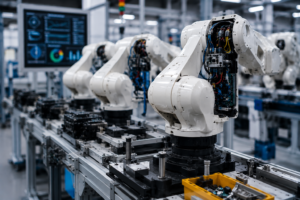
In today’s industrial landscape, sustainability is no longer optional—it’s a competitive necessity. For the plastics industry, which faces growing scrutiny over environmental impact, integrating robotics and automation is proving to be a game-changing strategy. Beyond improving efficiency, robotic automation is helping manufacturers dramatically reduce waste—material, time, and energy alike.
Let’s explore how automation is shaping a cleaner, smarter future for plastics manufacturing.
🔧 1. Precision That Prevents Material Waste
Traditional manual handling or outdated machinery often leads to overproduction, defects, or off-spec parts that must be scrapped. Robotics, on the other hand, brings pinpoint precision to every step—from injection molding to packaging.
Benefits:
- Reduced material overuse due to exact dispensing and forming
- Fewer defective products thanks to consistent cycle control
- Improved product uniformity, leading to less rework or rejection
🔁 2. Smart EOAT for Recycling and Sorting
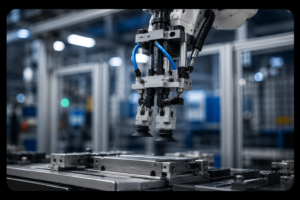
Modern End-of-Arm Tooling (EOAT) systems are now equipped with sensors and AI vision systems that help identify, sort, and separate recyclable plastics during or after production.
How it helps:
- Differentiates between materials (e.g., PET, HDPE) to direct waste to proper streams
- Prevents contamination of recyclable waste
- Allows for automation of material recovery directly on the production floor
⚡ 3. Energy-Efficient Production with Smart Robots
Robots today are not just precise—they’re energy-conscious. With optimized movement patterns, idle-time management, and real-time load sensing, automation solutions help significantly cut down energy usage per part.
Example Impacts:
- Up to 30% energy savings in certain robotic cell applications
- Integrated power management that reduces carbon footprint
- Reduced compressor and cooling needs due to tighter cycle times
📦 4. Reduced Packaging Waste with Robotic Accuracy
In packaging lines, robotic automation ensures exact material usage—whether it’s shrink wrap, labels, or cartons. No more extra layers, misaligned cuts, or oversized boxes.
Key Advantages:
- Optimized material consumption in secondary packaging
- Less rejection due to misaligned labels or seals
- Reduced plastic film waste during shrink or stretch processes
🔄 5. Enabling Closed-Loop Manufacturing
With real-time data collection and integration into MES/ERP systems, robotics can support closed-loop production models. This means waste data is tracked, analyzed, and reused—turning waste into insight.
What this enables:
- Identifying waste hotspots for corrective action
- Feeding scrap back into controlled reprocessing cycles
- Establishing more circular operations with feedback systems
🌍 The Bigger Picture: Automation as a Path to Circularity
By aligning automation strategies with sustainability goals, plastic manufacturers can significantly reduce waste and environmental impact while also improving bottom-line performance. From robotic handling and trimming to automated inspection and smart recycling, robotics brings both efficiency and eco-responsibility to the forefront.
At Devanshi Electronics Company, we’re committed to building the automation solutions that drive both productivity and sustainability in the plastics sector.
📣 Ready to Automate Sustainably?
Let’s build a future where automation and the environment go hand in hand.
Contact us to explore tailored robotic solutions for your plastic manufacturing line.